Treatment for Piles
Ayurvedic Treatment for Piles in Pune | Non-Surgical | Dr. Mande's Clinic, Wakad
Dr. Priyanka Mande at Dr. Mande’s Clinic, Wakad, Pune offers non-surgical Ayurvedic treatment for piles including Kshara Sutra and Kshar Karma procedures. She specialises in lady piles treatment for women and treats both internal and external haemorrhoids without hospitalisation or general anaesthesia. She holds B.A.M.S and M.D. in Ayurveda with 10+ years of experience.
Piles — or haemorrhoids — is one of the most common conditions in India, and one of the least talked about. Patients sit with the discomfort for months, sometimes years, before they see a doctor. By then, what could have been treated conservatively has often progressed to a grade that looks like it needs surgery.
This is especially true for women. Female piles are frequently overlooked, misattributed to other causes or dismissed as a temporary pregnancy symptom. Many women in Wakad, Hinjewadi and across PCMC are managing chronic piles discomfort silently — while going to work, managing households and continuing with life — simply because they do not know that a genuinely effective non-surgical option exists.
At Dr. Mande’s Clinic in Wakad, Pune, Dr. Priyanka Mande offers Ayurvedic piles treatment using Kshara Sutra and Kshar Karma — two classical Ayurvedic procedures that are recognised by the Ministry of AYUSH as the gold standard for non-surgical management of haemorrhoids. Most patients complete treatment and return to normal daily activity without hospitalisation, general anaesthesia or extended recovery time.
Services
PCOS and PCOD Treatment
Female Infertility Treatment
Lady Piles Treatment
Ayurvedic Pregnancy Care
Irregular Periods Treatment
Panchakarma Treatment
Address
Shop No. 2, Vardhaman Plaza, Chatrapati Chowk Rd, near Hotel Radha Pure Veg, Kaspate Wasti, Wakad, Pimpri-Chinchwad, Maharashtra 411057
Office Hours
Office Hours:
10:30 AM to 12:30 PM | 5:30 PM to 7:30 PM
Understanding Piles — What They Are and Why Women Are at Particular Risk
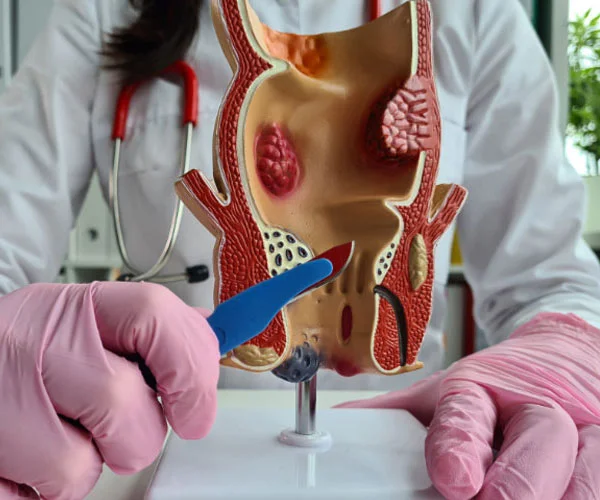
Haemorrhoids are swollen and inflamed veins in the rectum and lower anus. They develop when increased pressure in the pelvic and rectal area causes the blood vessels to stretch and bulge. They are graded from I to IV based on severity:
| Grade | Description and Typical Symptoms |
|---|---|
| Grade I | Internal haemorrhoids that do not prolapse. Painless bleeding during defaecation. Often visible only on proctoscopy. |
| Grade II | Prolapse during straining but return spontaneously. Bleeding, mucus discharge and mild discomfort. |
| Grade III | Prolapse during straining and require manual replacement. More significant bleeding, pain and itching. |
| Grade IV | Permanently prolapsed and cannot be manually replaced. Significant pain, bleeding and complications. May require surgical review. |
Grades I to III are well within the scope of non-surgical Ayurvedic treatment through Kshara Sutra and Kshar Karma at Dr. Mande’s Clinic. Grade IV cases are assessed individually — some respond to Kshara Sutra while others are referred for surgical consultation.
Why Women Are at Higher Risk
Women face specific risk factors for piles that men do not:
- Pregnancy: The growing uterus puts direct pressure on the rectal veins. Constipation from progesterone compounds this. Most pregnant women who develop piles never report them because they assume it is a temporary pregnancy symptom.
- Postpartum straining: The physical effort of delivery — particularly prolonged pushing — can create or significantly worsen existing haemorrhoids.
- Hormonal influence on vein tone: Oestrogen and progesterone affect the tone of vascular walls. Hormonal fluctuations across the menstrual cycle, pregnancy and menopause all influence haemorrhoidal blood vessel behaviour.
- Chronic constipation: More common in women than men due to slower gut transit time. Habitual straining over years is the single most modifiable cause of piles in women.
- Underreporting: Women are less likely to discuss anorectal symptoms — even with a doctor. This leads to delayed treatment and progression to higher grades that are harder to manage conservatively.
Our Services
Services Treated at Dr. Mande's Clinic, Wakad
Our services combine authentic Ayurvedic treatments, personalized care, herbal therapies, and wellness programs to support natural healing and long-term health.
How Ayurveda Understands and Classifies Piles
Piles is called Arsha in Ayurveda. The word literally translates to “that which torments like an enemy.” Ayurveda classifies Arsha into six types based on the predominant dosha involved:
| Arsha Type | Doshic Cause and Typical Presentation |
|---|---|
| Vataja Arsha | Dry, hard, rough and dark-coloured haemorrhoids. Severe pain. Often associated with constipation and dry diet. |
| Pittaja Arsha | Soft, inflamed, bleeding haemorrhoids with burning sensation. Associated with spicy food, alcohol and excess Pitta. |
| Kaphaja Arsha | Large, soft, whitish or mucus-coated haemorrhoids. Less painful but persistent. Associated with sedentary lifestyle. |
| Sannipataja Arsha | Mixed type involving all three doshas. Most complex to treat. Requires comprehensive Panchakarma before local treatment. |
| Sahaja Arsha | Congenital or hereditary piles. Present from birth or early life. |
| Raktatisara | Piles with significant active bleeding as the dominant symptom. Treated as an emergency presentation within Arsha classification. |
This classification is clinically important: the type of Arsha determines whether local treatment (Kshar Karma) is used alone, or whether it needs to precede or follow Kshara Sutra. Dr. Mande assesses the Arsha type at the first consultation before any procedure is planned.
Non-Surgical Ayurvedic Treatment for Piles at Dr. Mande's Clinic
Dr. Mande’s treatment for piles is built around four proven Ayurvedic approaches used in sequence based on grade, type and individual health:
Kshar Karma — Ayurvedic Chemical Cauterisation
Kshar is a powerful alkaline preparation derived from medicinal plants — primarily Apamarga (Achyranthes aspera) and Snuhi (Euphorbia neriifolia). Applied directly to the haemorrhoidal mass, it causes chemical cauterisation of the tissue, cutting off its blood supply and causing it to gradually shrink and fall off. Kshar Karma is the primary treatment for Grade I and II internal haemorrhoids. It is performed at the clinic in a single sitting, requires no anaesthesia and is completed in under 30 minutes. The patient rests briefly and returns home the same day.
Kshara Sutra — Ayurvedic Thread Ligation
Kshara Sutra is a medicated Ayurvedic thread coated with Snuhi latex, Apamarga Kshara and Haridra (turmeric). It is tied around the base of the haemorrhoidal pedicle under direct vision. The thread applies continuous chemical and mechanical pressure, gradually cutting through the haemorrhoid while simultaneously healing the tissue underneath. The haemorrhoid detaches over 7 to 14 days. Grade II and Grade III haemorrhoids are the primary indication for Kshara Sutra. The Ministry of AYUSH and multiple Indian clinical trials have validated Kshara Sutra as producing lower recurrence rates than conventional surgery for pilonidal sinuses and haemorrhoids.
Virechana — Systemic Purification Before Local Treatment
For patients with Grade III haemorrhoids, significant bleeding or a strong Pittaja Arsha presentation, Virechana (therapeutic purgation) is performed before local treatment. This clears excess Pitta from the blood and liver, reduces the systemic inflammatory load that is driving the haemorrhoidal engorgement and creates a cleaner tissue environment for Kshar Karma or Kshara Sutra.
Herbal and Dietary Management — Addressing the Root Cause
No local treatment for piles is complete without addressing the constipation, Vata imbalance and dietary patterns that created them. Dr. Mande prescribes Triphala (for bowel regularity without laxative dependency), Arshoghniya vati (classical anti-haemorrhoidal tablet), Abhayarishta (classical fermented preparation for anorectal health) and a dietary plan that eliminates trigger foods, increases fibre and hydration and prevents recurrence. Without this layer, haemorrhoids return.
Lady Piles — A Special Focus at Dr. Mande's Clinic
The term “lady piles” has become the commonly searched phrase for haemorrhoids in women — and it signals something specific: women looking for a female doctor who understands piles in the context of the female body, female hormones and female life events like pregnancy and menopause.
Dr. Mande’s clinic addresses lady piles with this context built into the treatment:
- Pregnancy-related piles: Managed conservatively during pregnancy with Triphala, sitz baths, dietary correction and topical Jatyadi oil application. Kshara Sutra is deferred to the postpartum period.
- Postpartum piles: Addressed 6 to 8 weeks after delivery when the body is ready. Kshar Karma is the preferred option at this stage for Grade I and II.
- Menstrual-cycle-linked flare: Many women report piles flaring before or during their period, linked to progesterone-driven vascular changes. This pattern points to a hormonal component and is managed alongside the menstrual regulation protocol.
- Piles with PCOD: PCOD-related constipation and metabolic sluggishness can create or worsen haemorrhoids. Both are treated together in a combined protocol.
- Piles in perimenopausal women: Vascular wall laxity associated with falling oestrogen levels worsens haemorrhoidal symptoms in the 40 to 55 age group. Rasayana herbs alongside anorectal treatment are used in this case.
What to Expect at Your Piles Consultation at Dr. Mande's Clinic
A lot of patients arrive for a piles consultation with anxiety about what the examination involves. Here is what actually happens:
- History and symptom discussion: Dr. Mande takes a full history including onset, severity, triggers (food, constipation, pregnancy), current medications and any previous treatment. This is conducted in a private, completely confidential setting.
- Visual or proctoscopic examination: A brief examination is conducted to assess the grade of haemorrhoids and distinguish between internal and external types. This is quick and minimally uncomfortable.
- Treatment plan discussion: Based on the grade and type, Dr. Mande explains which treatment is recommended — Kshar Karma, Kshara Sutra or conservative management — and what to expect at each stage.
- Procedure scheduling: For Kshar Karma, the procedure is often done at the same appointment or at the next visit. For Kshara Sutra, a dedicated procedure slot is booked. Both are outpatient procedures at the clinic.
- Dietary and lifestyle guidance: A dietary plan and bowel habit correction protocol is prescribed alongside the procedure. This is not optional — it is the only way to prevent recurrence.
We're The Ayurvedic gynecologist
Delivering Wellness with Every Prescription
Dr. Priyanka Mande, ayurvedic gynecologist in Wakad Pune. Natural treatments for PCOD, infertility, piles and pregnancy care.
Dr. Priyanka Mande
Personalized Ayurvedic care for chronic conditions and wellness through herbal therapies, Panchakarma, and holistic lifestyle guidance.
10:30 AM to 12:30 PM
5:30 PM to 7:30 PM
Quick Links
Services
Reach Us
Shop No. 2, Vardhaman Plaza, Chatrapati Chowk Rd, near Hotel Radha Pure Veg, Kaspate Wasti, Wakad, Pimpri-Chinchwad, Maharashtra 411057

All Rights are Reserved By Dr. Priyanka Mande | Website Designed by EDGELINK Technology Pvt Ltd.