Panchakarma Treatment
Panchakarma Treatment in Pune | Dr. Mande's Clinic, Wakad
Dr. Priyanka Mande at Dr. Mande’s Clinic, Wakad, Pune offers Panchakarma treatment including Vamana, Virechana, Basti, Nasya and Abhyanga. Each programme is individually designed after Prakriti and Vikriti assessment. The clinic treats PCOS, infertility, digestive disorders, stress and chronic conditions through classical Panchakarma. Dr. Mande holds B.A.M.S and M.D. in Ayurveda.
Panchakarma has a reputation problem in Indian cities. Between wellness spas offering “Panchakarma packages” with relaxing oil massages and resorts marketing “Ayurvedic detox retreats,” the clinical reality of what Panchakarma actually is has become blurred. Many people who have “done Panchakarma” at a spa have experienced Abhyanga — which is one preparatory therapy before Panchakarma begins — but not the Panchakarma itself.
Classical Panchakarma is a medical-grade therapeutic system, not a relaxation programme. The five therapies — Vamana, Virechana, Basti, Nasya and Raktamokshana — work at the level of deep tissue, metabolic channels and doshic root imbalances. They require proper patient assessment before starting, careful therapeutic management during and structured dietary restoration afterward. Done correctly, they produce outcomes that no surface-level wellness treatment can match.
At Dr. Mande’s Clinic in Wakad, Pune, Panchakarma is administered as medicine. Dr. Priyanka Mande (B.A.M.S, M.D. Ayurveda) designs each programme after a thorough Prakriti and Vikriti assessment. The therapies offered, their sequencing, the specific medicated oils and decoctions used and the duration of each procedure are determined by your individual health picture — not a fixed package.
Services
PCOS and PCOD Treatment
Female Infertility Treatment
Lady Piles Treatment
Ayurvedic Pregnancy Care
Irregular Periods Treatment
Panchakarma Treatment
Address
Shop No. 2, Vardhaman Plaza, Chatrapati Chowk Rd, near Hotel Radha Pure Veg, Kaspate Wasti, Wakad, Pimpri-Chinchwad, Maharashtra 411057
Office Hours
Office Hours:
10:30 AM to 12:30 PM | 5:30 PM to 7:30 PM
What Panchakarma Actually Is — and What It Is Not
The word Panchakarma means “five actions” in Sanskrit. These five actions are defined therapeutic procedures that together constitute the core of Ayurvedic purification medicine:
Vamana
Removal of excess Kapha from the upper body through controlled therapeutic vomiting
Vamana is the primary treatment for Kapha-dominant conditions: chronic respiratory disorders, obesity, diabetes with Kapha dominance, skin conditions and PCOS with significant Kapha accumulation. It is preceded by 3 to 7 days of Snehana (oleation) and Swedana (steam therapy) to mobilise toxins toward the upper channels before expulsion. It is performed in a single therapeutic sitting under clinical supervision.
Virechana
Removal of excess Pitta from the liver, blood and small intestine through medicated purgation
Virechana is the most commonly used Panchakarma procedure at this clinic. It clears the liver and blood of excess Pitta, reducing systemic inflammation, improving hormonal clearance and restoring Agni (metabolic fire). It is the primary therapy for PCOS with elevated androgens, irregular periods, acne, liver disorders including fatty liver, skin conditions, hormonal imbalance and as preparation for fertility treatment. Preceded by 3 to 7 days of internal and external oleation.
Basti
Correction of Vata imbalance through medicated oil or decoction enemas — the king of all Panchakarma therapies
Basti is described in classical texts as the most powerful of the five Panchakarma procedures because Vata governs all movement and function in the body — and correcting Vata through the colon corrects the entire system. Two types are used: Anuvasana Basti (medicated oil enema for deep Vata nourishment) and Astha Basti (medicated decoction enema for cleansing). Basti is used for infertility, piles, constipation, irritable bowel syndrome, arthritis, lower back disorders, neurological conditions and stress. Uttara Basti — a related procedure administered through the vaginal route — is used specifically for uterine and fertility conditions.
Nasya
Correction of conditions above the clavicle through nasal delivery of medicated oils and herbal preparations
Nasya works through the nasal route — which Ayurveda identifies as the gateway to the head, neck and brain. Medicated oils or powders are administered into the nostrils to address sinusitis, migraines, hair loss, thyroid conditions, hormonal disorders affecting the hypothalamic-pituitary axis and stress-related neurological symptoms. Nasyam is also used in PCOS treatment to correct LH signalling from the pituitary gland, which directly impacts ovulation.
Raktamokshana
Purification of Rakta Dhatu (blood tissue) in severe Pitta-blood disorders
Raktamokshana is the fifth classical Panchakarma therapy but is the least commonly performed in modern clinical settings. At Dr. Mande’s Clinic, Jalaukavacharana (leech therapy) — a form of Raktamokshana — is used for highly localised conditions including varicose veins, chronic skin disorders and severe haemorrhoids where Pitta-blood excess is the dominant pathology.
Purvakarma — The Preparation That Makes Panchakarma Work
One of the most important and most overlooked aspects of clinical Panchakarma is Purvakarma — the preparatory procedures that must precede the five main therapies. Without Purvakarma, the body’s toxins are not mobile enough to be effectively expelled. Most spa-based “Panchakarma” skips this phase entirely, which is why clinical outcomes differ dramatically from wellness outcomes.
Purvakarma at Dr. Mande's Clinic involves:
- Deepana and Pachana (digestive fire stimulation): 3 to 5 days of herbal preparations to kindle Agni and liquefy Ama (metabolic waste) so it can move toward the channels for expulsion
- Snehana (oleation): Internal ghee or oil consumption and external Abhyanga (full body medicated oil massage) to lubricate the channels and mobilise fat-soluble toxins from deep tissue into the circulation
- Swedana (steam therapy): Medicated steam applied to the body to open the channels, dilate the srotas (channels) and encourage toxins to flow toward the gastrointestinal tract for elimination
The entire Purvakarma phase typically takes 3 to 7 days depending on the patient’s health status and the Panchakarma therapy being prepared for. This is why genuine Panchakarma treatment is a programme — not a single-session service.
Our Services
Services Treated at Dr. Mande's Clinic, Wakad
Our services combine authentic Ayurvedic treatments, personalized care, herbal therapies, and wellness programs to support natural healing and long-term health.
Paschat Karma — Recovery and Rebuilding After Panchakarma
Equally important to the procedures themselves is Paschat Karma — the post-Panchakarma diet and lifestyle protocol that allows the body to rebuild properly after deep purification.
The period immediately after Panchakarma is a time of heightened sensitivity and rebuilding. The wrong foods, activities or exposures at this stage can undo the work of the treatment. Dr. Mande prescribes a specific Paschat Karma protocol covering:
- Samsarjana Krama: A graded dietary reintroduction starting with light rice water (Peya), progressing through thin gruel, thick gruel, rice with light soup and finally normal food over 5 to 7 days
- Activity restrictions: Avoidance of strenuous exercise, exposure to extreme temperatures, late nights and emotional stress during the recovery window
- Rasayana administration: Once the channels are clean and the body is ready, Rasayana (rejuvenation) herbs are given to rebuild the Dhatus with high-quality tissue, accelerating the benefits of the purification
- Follow-up assessment: A post-Panchakarma consultation assesses the outcomes and determines whether a second course is needed or whether maintenance herbal treatment is sufficient
The entire Purvakarma phase typically takes 3 to 7 days depending on the patient’s health status and the Panchakarma therapy being prepared for. This is why genuine Panchakarma treatment is a programme — not a single-session service.
Conditions Treated Through Panchakarma at Dr. Mande's Clinic
Panchakarma at this clinic is used both as standalone therapeutic intervention and as preparation for specific disease treatment. The following conditions benefit significantly from Panchakarma:
| Condition | Primary Panchakarma Therapy Used |
|---|---|
| PCOS and PCOD | Virechana + Uttara Basti + Nasya |
| Female Infertility | Virechana + Basti + Uttara Basti |
| Irregular Periods | Virechana (Pitta-type) or Basti (Vata-type) based on assessment |
| Fatty Liver | Virechana — primary liver detoxification procedure |
| Obesity and Metabolic Disorder | Vamana + Virechana + dietary correction |
| Thyroid Disorders | Nasya + Virechana + lifestyle correction |
| Chronic Constipation | Basti — medicated enema as primary bowel correction |
| Arthritis (Amavata) | Basti + Abhyanga + anti-inflammatory internal herbs |
| Migraine | Nasya + Shirodhara + Virechana |
| Skin Disorders (Psoriasis, Eczema) | Virechana + Raktamokshana in severe cases |
| Diabetes Management (Type 2) | Virechana + dietary correction + Rasayana |
| Hypertension | Shirodhara + Virechana + stress management protocol |
| Seasonal Wellness Detox | Selected therapies based on season and Prakriti |
Abhyanga and Shirodhara — Supporting Therapies Offered at This Clinic
While Abhyanga and Shirodhara are not part of the classical five Panchakarma procedures, they are integral Purvakarma and supportive therapies used extensively at this clinic:
Abhyanga (Full Body Medicated Oil Massage)
Abhyanga uses warm medicated oils selected based on the patient’s Prakriti and current health condition. It is not a spa massage — the strokes, oils, duration and pressure are all therapeutically prescribed. Abhyanga improves circulation, reduces Vata aggravation, nourishes the skin and deep tissues, reduces cortisol and prepares the body for Panchakarma procedures. It is also offered as a standalone treatment for stress, anxiety, fatigue and joint disorders.
Shirodhara (Continuous Oil Stream on the Forehead)
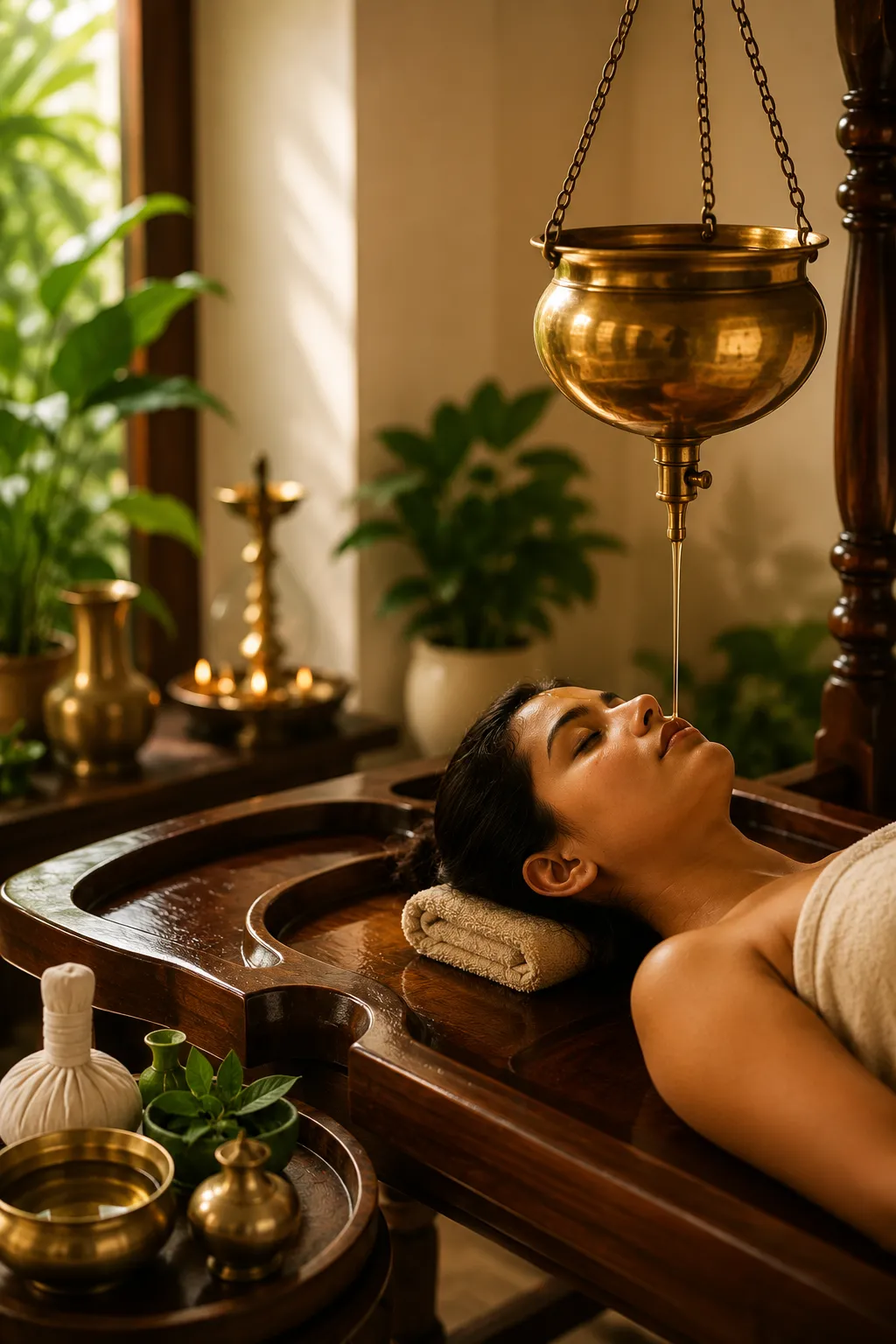
Shirodhara involves a continuous stream of warm medicated oil poured over the forehead (specifically the Ajna point) in a controlled oscillating pattern. Its effect on the nervous system is immediate and measurable — cortisol drops, the sympathetic nervous system quiets and deep parasympathetic rest is induced. Clinical evidence supports Shirodhara for chronic anxiety, insomnia, hypertension, migraine and PTSD-related stress disorders. At this clinic it is offered both as a standalone treatment and as part of the broader Panchakarma programme.
Who Should Consider Panchakarma and Who Should Not
Panchakarma is not suitable for everyone, and responsible Ayurvedic practice means being clear about this:
Panchakarma is well-suited for
- Adults with chronic conditions that have not responded to medication alone
- Patients preparing for specific Ayurvedic treatment (fertility, PCOS, infertility) who need cleansed channels for optimal results
- Working professionals in the Hinjewadi IT corridor or PCMC area managing chronic stress, fatigue and metabolic disorders
- Women with hormonal conditions where liver and blood purification is clinically indicated
- Anyone seeking a medically supervised seasonal detox distinct from a generic wellness spa
Panchakarma requires caution or is deferred for
- Pregnancy: Strong Panchakarma procedures like Vamana and Virechana are not performed during pregnancy. Mild Abhyanga and specific Basti procedures may be used under careful supervision.
- Extreme debility: Very weak or severely malnourished patients need to be strengthened first through Rasayana before undergoing purification.
- Active acute infection or fever: Purification is deferred until the acute condition resolves.
- Post-surgery recovery: A waiting period of 4 to 6 weeks is typically observed before Panchakarma is considered.
- Children under 7 years: Full Panchakarma is not indicated. Modified, gentle procedures may be appropriate based on the condition.
We're The Ayurvedic gynecologist
Delivering Wellness with Every Prescription
Dr. Priyanka Mande, ayurvedic gynecologist in Wakad Pune. Natural treatments for PCOD, infertility, piles and pregnancy care.
Dr. Priyanka Mande
Personalized Ayurvedic care for chronic conditions and wellness through herbal therapies, Panchakarma, and holistic lifestyle guidance.
10:30 AM to 12:30 PM
5:30 PM to 7:30 PM
Quick Links
Services
Reach Us
Shop No. 2, Vardhaman Plaza, Chatrapati Chowk Rd, near Hotel Radha Pure Veg, Kaspate Wasti, Wakad, Pimpri-Chinchwad, Maharashtra 411057

All Rights are Reserved By Dr. Priyanka Mande | Website Designed by EDGELINK Technology Pvt Ltd.